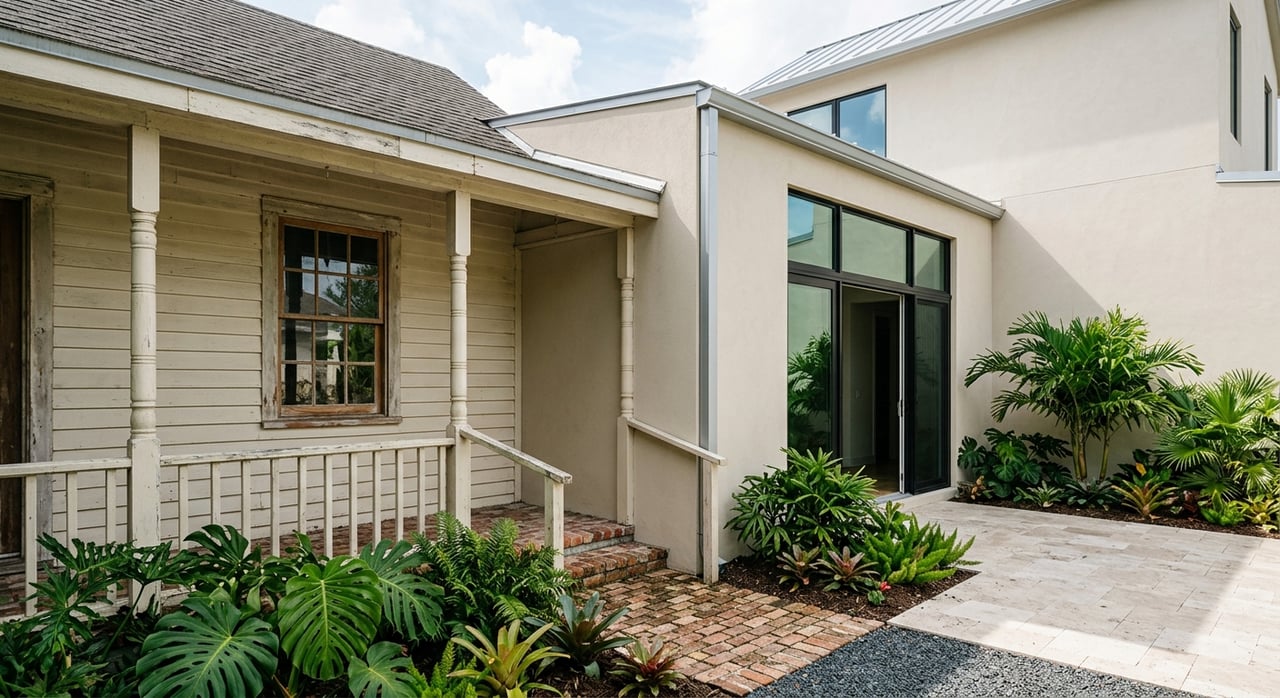
Thinking about buying in Lake Worth Beach? One of the biggest choices you may face is whether to go for a historic cottage full of Old Florida charm or a newer home built to current standards. Both can be great options, but they offer very different day-to-day experiences, costs, and renovation paths. If you want to make a smart move with clear expectations, this guide will help you compare the tradeoffs. Let’s dive in.
What a Historic Cottage Means Here
In Lake Worth Beach, a historic cottage is not just an older house. The city identifies six local historic districts: Old Town, Old Lucerne, Northeast Lucerne, Southeast Lucerne, South Palm Park, and College Park. In places like Old Lucerne, early homes often include Wood Frame Vernacular designs, also described by the city as Coastal Cottage architecture.
For you as a buyer, that usually means a smaller footprint, noticeable front-porch presence, and strong original material character. These homes often sit on relatively small lots with typical 50-foot widths and 20-foot front setbacks. The appeal is less about uniformity and more about personality, texture, and a sense of place.
Why Buyers Love Historic Cottages
Historic cottages often attract buyers who want a home that feels distinctive from the start. Many still include original wood details, siding, porches, trim, doors, windows, and flooring. That kind of authenticity can be hard to replicate in newer construction.
If you enjoy the idea of improving a home over time, a cottage may also give you more creative satisfaction. Lake Worth Beach encourages preservation, repair, and adaptive use, which can make a thoughtful renovation feel rewarding. For buyers who appreciate design character, that can be a major plus.
Character Often Lives in the Details
In older wood-frame homes, the details often matter most. Porch elements, wood siding, trim profiles, and original windows can shape the entire feel of the house. Even when these features need work, they may still contribute meaningful value to the home's overall look and identity.
The city’s preservation files may also help you understand what was there originally. According to the city brochure, these records can include permit cards, architectural drawings, later permits, and photos. If you are hoping to restore rather than replace, that kind of background can be useful.
What to Expect With Historic Cottage Maintenance
The flip side of charm is upkeep. The National Park Service notes that wood-frame homes often include original materials that need ongoing maintenance, especially porches, which can be vulnerable to decay and termites. That does not mean these homes are poor choices, but it does mean you should budget with open eyes.
Windows are another common topic. Historic windows can often be repaired, and comfort can sometimes be improved through weatherstripping, caulking, and storm windows rather than full replacement. If you are buying a cottage, it helps to think in terms of repair and selective upgrades instead of assuming everything should be swapped out.
Renovations May Involve More Review
In Lake Worth Beach, exterior changes to a historic property are not just a design decision. The city requires a Certificate of Appropriateness before exterior work begins and before a building permit can be issued for a property in a historic district or for an individually designated landmark. That process is central to planning any renovation.
The city also recommends speaking with staff before finalizing plans or purchasing windows and doors. That is especially important if you are the kind of buyer who wants to move quickly after closing. A historic home can absolutely be updated, but your timeline may look different from a typical remodel.
A Potential Financial Upside for Historic Homes
There may be a tax incentive for the right project. Florida authorizes local historic-property tax exemptions for approved rehabilitation work on qualified historic properties, and Lake Worth Beach says the city and Palm Beach County offer a 10-year ad valorem property tax abatement for qualifying rehabilitation projects on contributing historic properties.
That said, not every home or project will qualify. Eligibility depends on designation, project scope, and compliance with preservation standards. If you are considering a cottage because you want to renovate thoughtfully, this is one of the first items worth checking.
Why Some Buyers Prefer New Homes
Newer homes offer a different kind of confidence. Instead of focusing on preserving original materials, you are usually starting from a current-code baseline. For many buyers, that means fewer immediate repair decisions and a simpler first few years of ownership.
Florida’s current building framework supports that advantage. The Florida Building Code, 8th Edition, became effective December 31, 2023, and the state’s current residential energy code is the 2021 IECC with state amendments, also effective December 31, 2023. In practical terms, newer homes are generally built with current thermal-efficiency standards in mind.
Efficiency Starts Higher in New Construction
State law says new residential buildings must meet Florida’s thermal-efficiency standards. That includes the building envelope, HVAC selection and configuration, HVAC equipment performance, and service water heating design and equipment selection. The statute also says new residential buildings generally must have ceiling insulation rated at R-19 or more, space permitting.
For you, that can translate into fewer near-term insulation and air leakage concerns compared with an older wood-frame home. A new home is not maintenance-free, but you are less likely to begin ownership by immediately planning envelope upgrades. That predictability matters if you want a more straightforward move.
The Tradeoff: Rules and Fees
While new homes can offer convenience, they may come with another layer of oversight. In many newer communities, homeowners’ associations are more common. If you buy in an HOA, exterior changes may be reviewed based on the declaration or published guidelines.
Florida law says those standards must be applied fairly, and written denials must be specific. The same statute also requires HOAs to adopt hurricane-protection specifications that comply with the building code. So while newer homes may be easier from a maintenance standpoint, they can still come with rule-based decision-making.
Condo Buyers Need Extra Document Review
If the newer property is a condominium, your review should go deeper. According to the Florida Department of Business and Professional Regulation, condo associations must maintain official records in an organized way, keep budgets and accounting records for at least seven years, and make records available within 10 working days after a proper written request.
DBPR also says residential condominium associations with buildings three habitable stories or higher must complete a Structural Integrity Reserve Study at least every 10 years. Owners must receive the study or a notice of availability within 45 days. Reserve funding also cannot be waived for SIRS items such as roofs, structural systems, waterproofing, windows, and exterior doors.
Historic Cottage vs New Home
The best choice usually comes down to your priorities. In Lake Worth Beach, this is less about one option being better and more about which ownership experience fits you best.
| If you value... | Historic cottage may fit | New home may fit |
|---|---|---|
| Design character | Strong original details and porch presence | More standardized finishes |
| Renovation style | Repair and preservation-minded updates | Fewer immediate upgrade needs |
| Approval process | Historic review may be required for exterior work | HOA or condo review may apply |
| Energy baseline | May need selective improvements over time | Built to current code standards |
| Ownership feel | Hands-on and design-driven | Predictable and convenience-focused |
Questions to Ask Before You Buy
A good decision starts with the right due diligence. Whether you are drawn to an older cottage or a newer build, a few local questions can quickly sharpen the picture.
For a historic cottage, ask:
- Is the property inside one of Lake Worth Beach’s historic districts?
- Will a Certificate of Appropriateness be required for exterior changes?
- Are the windows, siding, porch, or other visible details original?
- Do city preservation files show original drawings, photos, or permit history?
- Could a planned rehabilitation qualify for the 10-year tax abatement program?
For a newer home, ask:
- Is there an HOA or condominium association?
- What exterior rules apply to improvements or storm protection?
- What do the association budget and records show?
- If it is a qualifying condo building, has the Structural Integrity Reserve Study been completed?
- What reserve obligations may affect your monthly costs?
Which Option Fits Your Lifestyle?
If you love architectural character, enjoy porch living, and do not mind planning repairs carefully, a historic cottage may feel more rewarding. These homes often ask more of you, but they can also give you a more personal connection to the property and to Lake Worth Beach’s older built environment.
If you want current-code performance, newer systems, and fewer immediate project decisions, a new home may be the easier fit. You may trade some architectural individuality for a simpler start, especially if convenience and predictability are high on your list.
The right choice depends on how you want to live, what kind of projects you are comfortable taking on, and how much structure you want around future changes. If you want help weighing character, cost, and long-term fit in Lake Worth Beach, Crystal Brooke Bachmann offers a hands-on, responsive approach that can help you move forward with clarity.
FAQs
What is considered a historic cottage in Lake Worth Beach?
- In Lake Worth Beach, a historic cottage usually refers to an older home in or near one of the city’s historic districts, often with Wood Frame Vernacular or Coastal Cottage characteristics such as compact scale, porches, and original material details.
Do historic homes in Lake Worth Beach require special approval for renovations?
- Yes. For properties in a historic district or individually designated landmarks, Lake Worth Beach requires a Certificate of Appropriateness before exterior work begins and before a building permit can be issued.
Are historic windows in Lake Worth Beach cottages always replaced?
- No. The National Park Service says historic windows can often be repaired, and weatherstripping, caulking, and storm windows may improve comfort and thermal performance without full replacement.
Are new homes in Lake Worth Beach more energy efficient?
- Newer homes generally start from a current-code baseline. Florida’s current residential energy code and thermal-efficiency standards apply to new residential construction, which can mean fewer near-term insulation and air leakage concerns.
What should condo buyers review in newer Lake Worth Beach properties?
- Condo buyers should review association records, budgets, and reserve information. For qualifying buildings that are three habitable stories or higher, buyers should also check whether a Structural Integrity Reserve Study has been completed.
Can a historic home in Lake Worth Beach qualify for a tax benefit?
- It may. Lake Worth Beach says the city and Palm Beach County offer a 10-year ad valorem property tax abatement for qualifying rehabilitation projects on contributing historic properties, subject to eligibility and compliance requirements.